Case study
Green Navigation
Weather routing algorithms, Canonical Green, the startup I co-founded, and an open benchmark built with RISE.
- Co-founded Canonical Green
- About 10% lower GHG emissions in a simulated tugboat pilot
- Co-created an open benchmark; eight teams in its first edition
My contribution. I co-developed routing algorithms, ran pilot simulations, co-founded Canonical Green and co-created the open Weather Routing Benchmark.
Project context and partners
Project and partners
- Canonical Green Startup I co-founded to turn the research into software.
-
 Boluda Towage Towage company in the simulated pilot. It checked the results against its own expectations.
-
 RISE Research Institutes of Sweden Co-created the open Weather Routing Benchmark.
- Ayuntamiento de València Funded company development through Missions València 2030.
One project, from routing research to a startup and a shared benchmark. I work on choosing ship routes that account for wind, waves and currents to reduce fuel use and emissions.
My role and the collaboration
The work started at UCA Datalab, University of Cádiz, as the Smart Shipping project. My supervisor David Gómez-Ullate suggested using the ocean current data from our fisheries work to route vessels. We developed the idea together, and I worked on it from the start. After my PhD the research continued at IE University in funded projects led by David Gómez-Ullate, where I am a team member.
Routing research
I co-developed HADAD and worked on the routing algorithms from the early Smart Shipping project. During a research stay at Dalhousie University, I adapted a variational method to Python and built the benchmarks for our hybrid search paper.
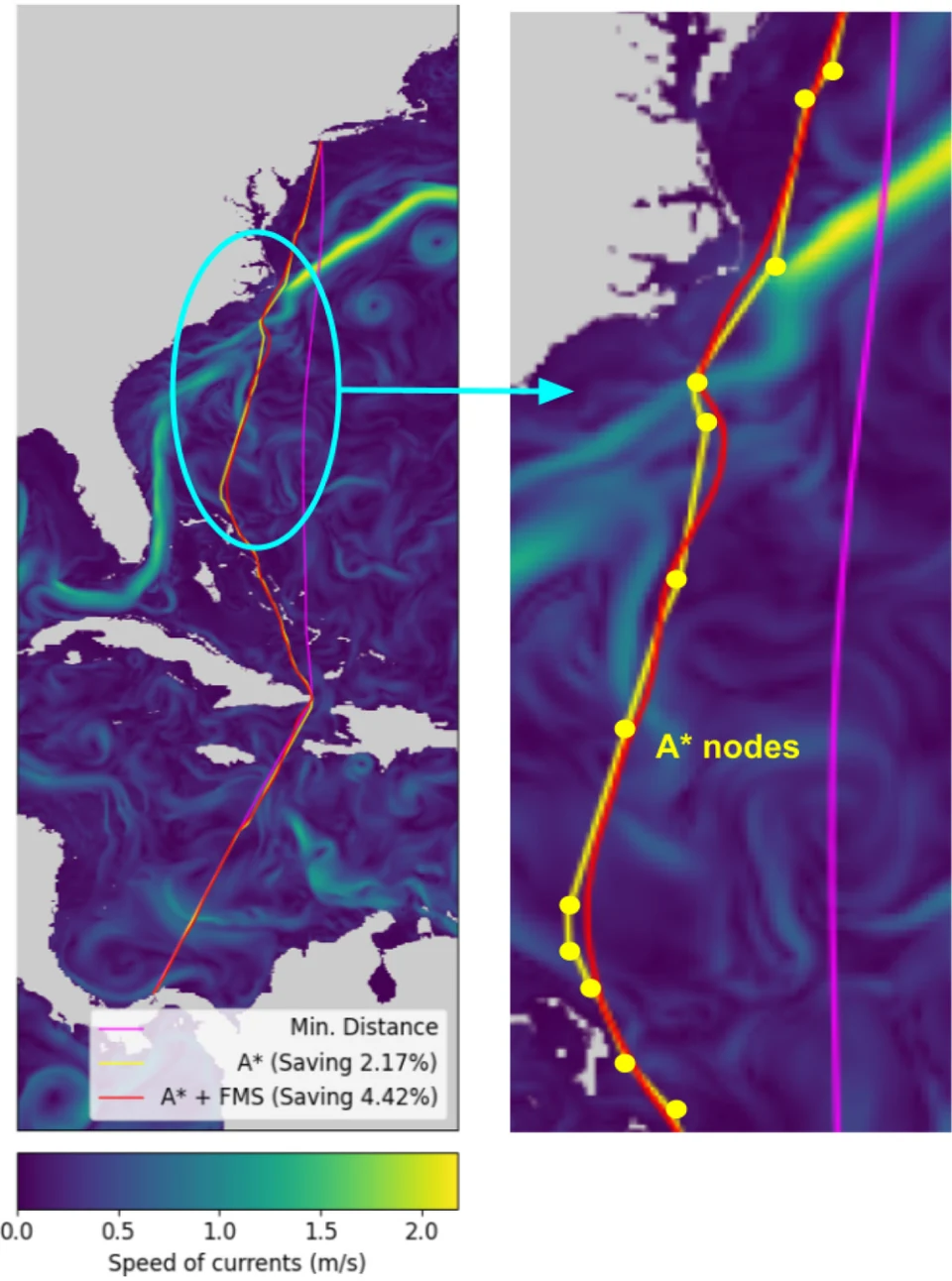
A route has to be found among millions of possible paths, with wind, waves and currents that change over time. HADAD works in two steps. It first searches a hexagonal grid with an A-star algorithm, which gives the ship more directions to choose from than a square grid. It then smooths the route in continuous space with a variational method. BERS, the newer method, searches with an evolutionary algorithm and refines the result with the same kind of variational step. It handles fixed arrival times.
Co-founding Canonical Green
In 2023 I co-founded Canonical Green to turn our routing research into software for ships. I am a board member and CTO; my initial role was COO. Green Navigation is the company’s weather-routing product.
I developed and ran the algorithms for a pilot with Boluda Towage through the Opentop acceleration programme. On the tested tugboat routes, simulations using validated consumption models showed about 10% lower GHG emissions. Boluda confirmed that the results matched its expectations. The pilot did not involve trials on a real vessel.
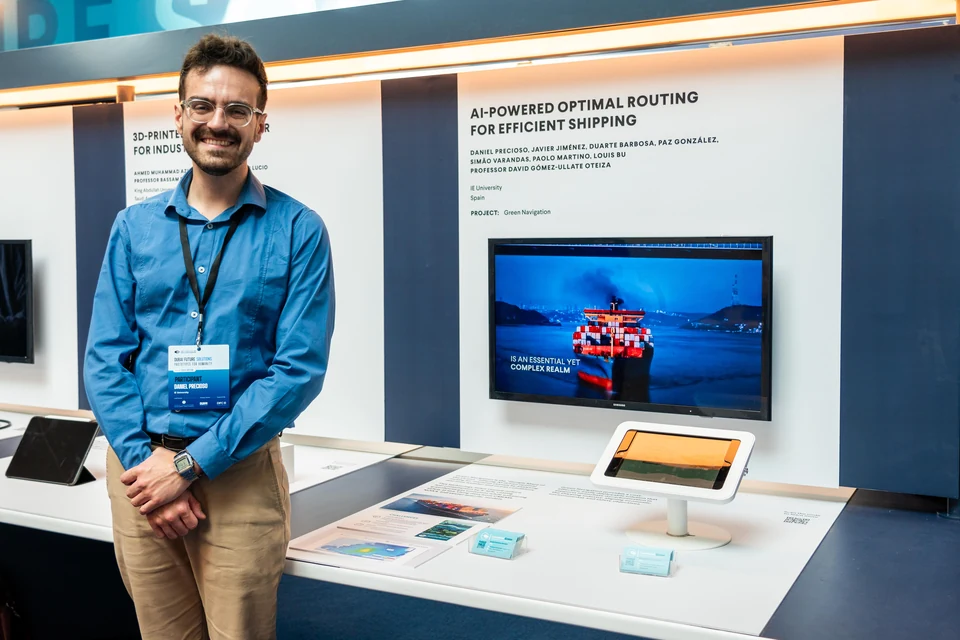
I pitched the project to the Missions València 2030 jury, where it ranked first and received a €93,362.84 grant. I also presented it at the European Parliament. In 2024, Green Navigation was selected for Prototypes for Humanity in Dubai, among 100 projects from more than 2,000 submissions.
Creating an open Weather Routing Benchmark
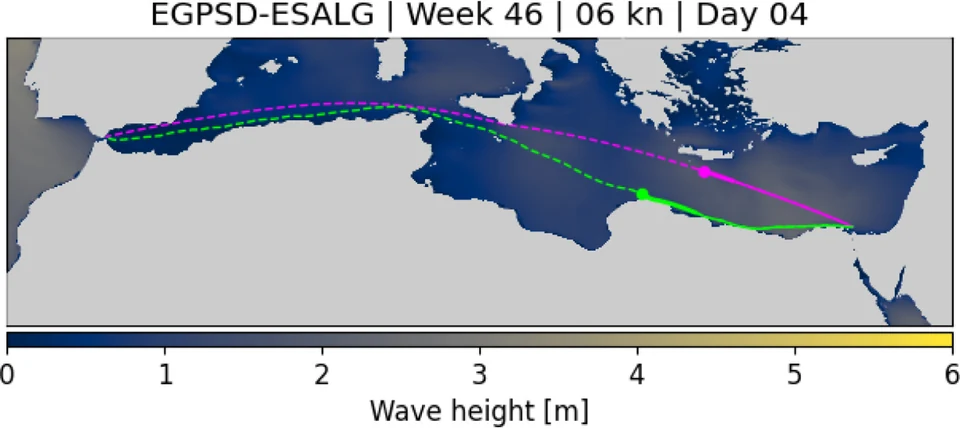
I co-created the Weather Routing Benchmark with IE University and RISE Research Institutes of Sweden. It gives researchers shared test problems, open datasets and a public leaderboard so that routing methods can be compared on the same basis.
Eight teams took part in the first edition, held with the SWOPP3 workshop in 2026. I presented the results and our BERS method in Gothenburg. BERS combines evolutionary search with variational refinement and is a preprint under review.
The next steps are to extend the benchmark with harder cases, including uncertainty and Arctic routing. Explore the benchmark and leaderboard →
Results and limits
- Pilot. GHG emissions fell by about 10% on the tugboat routes we tested, in simulation. Boluda confirmed the numbers matched their expectations. It was not tested on a real vessel.
- HADAD. On a benchmark of 1,560 routes over a full year, it saved an extra 4% fuel on average compared with a pure graph search, measured against the shortest route. The savings were up to 27% in extreme weather. The average gain is much smaller than the peak.
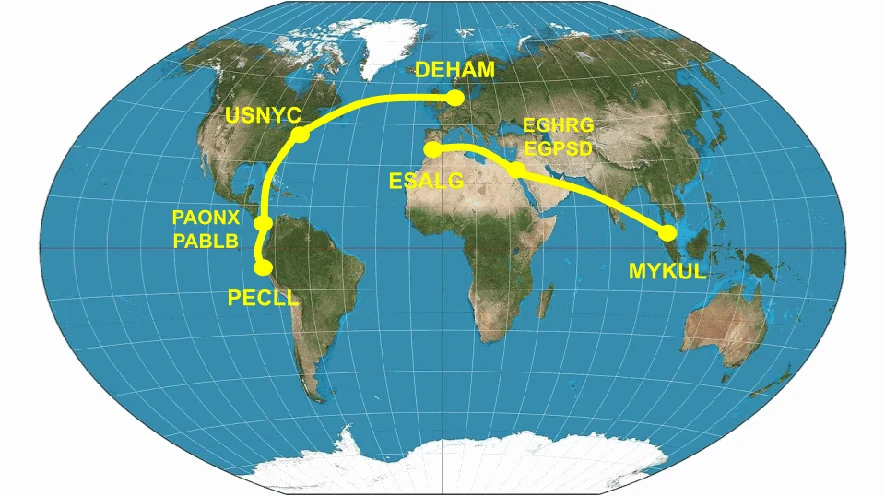
- BERS. It is a preprint under review. It was tested on synthetic cases and on 2024 ocean data for two ocean crossings.
- Benchmark. The first edition compares methods on shared problems. It does not yet include uncertainty or Arctic routes.
Evidence and links